



.gif)


What your silage is telling you

Cathal Bohane
Head of InTouch Nutrition
As October brought milder weather, grass growth has had a seasonal boost across the country. Data from Pasturebase indicates that this year’s growth is set to exceed both last year’s figures and the five-year average. However, it’s important to recognise that growth rates can vary significantly due to local micro-climates, meaning that farms only a short distance apart may experience very different conditions. Many farms are now approaching their autumn closing targets, with heavier farms closing by mid-November with drier farms able to extend grazing until the end of November, depending on local conditions.
With silage soon becoming a major component of livestock diets, it is crucial to have it analysed before feeding. While it’s often said that cows are the best ‘laboratories’ for testing silage quality, relying solely on animal performance can be risky, especially in block-calving systems. In these systems, issues may only become apparent after they have already impacted herd health or productivity, making it difficult to correct problems in time. This is particularly true for spring calving herds, where catching up after a nutritional setback can be challenging.
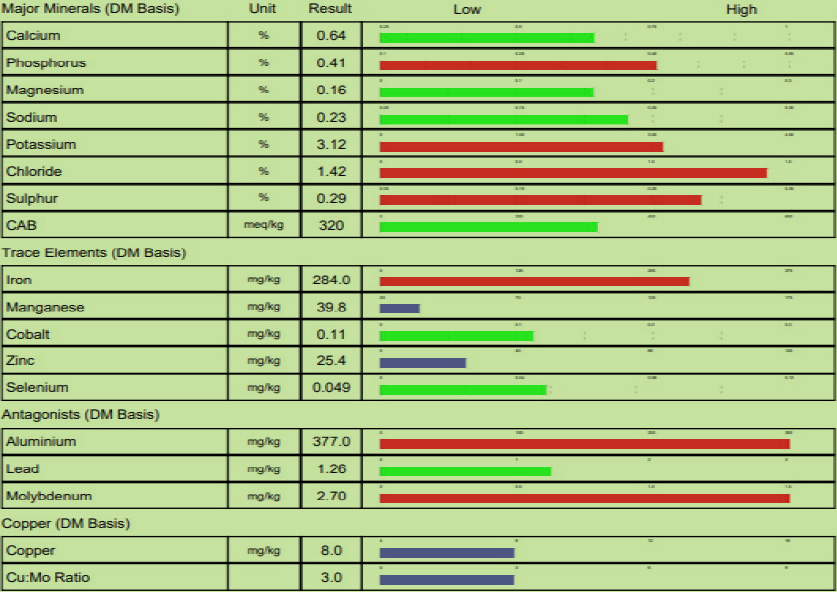
Many silage analyses use a traffic-light system to indicate mineral levels, but it’s vital to understand that these colours simply show whether a result is high or low compared to other samples analysed by the laboratory and they do not indicate whether a result is inherently good or bad. Major minerals can highlight risks of metabolic issues around calving, while trace elements play a key role in fertility, immunity, health and overall productivity. For example, high potassium (K) in this sample (ideally <1.8 per cent) and elevated cation-anion balance (CAB) increase the risk of milk fever. To mitigate this, dilute the silage and supplement with extra magnesium. Low levels of copper, zinc and selenium can negatively affect animal health, fertility, immunity, and productivity. High concentrations of ‘antagonist’ minerals like molybdenum can worsen copper deficiencies. Therefore, it’s important to supplement with high-quality protected minerals, such as Bioplex or Selplex, and to seek mineral advice tailored to your specific silage from your supplier.

